Die Toten Hosen @ Neue Messe Freiburg 2026
Event 25 July 2026
“How many visitors are actually already inside?” I asked security at the entrance check. “A little over 42,000,” came the reply.
That was still hours before Die Toten Hosen were due to perform.
Even then, it was clear that I would not be experiencing this concert anywhere near the stage.
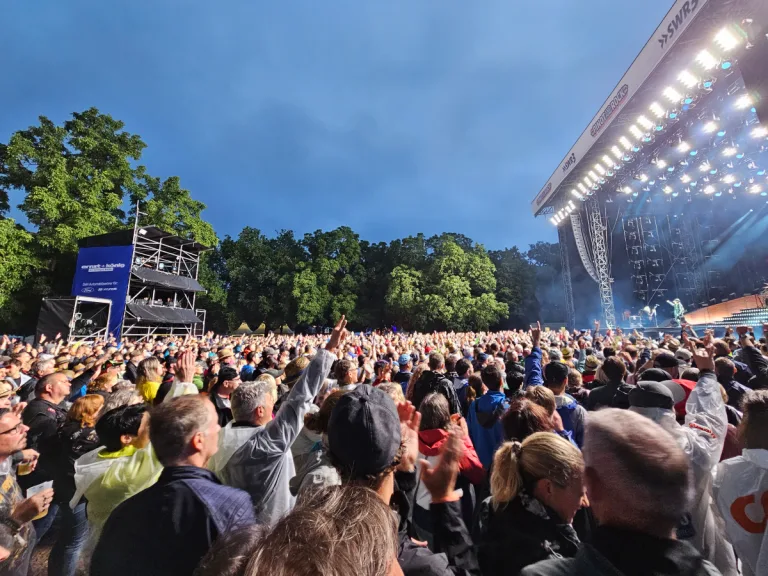
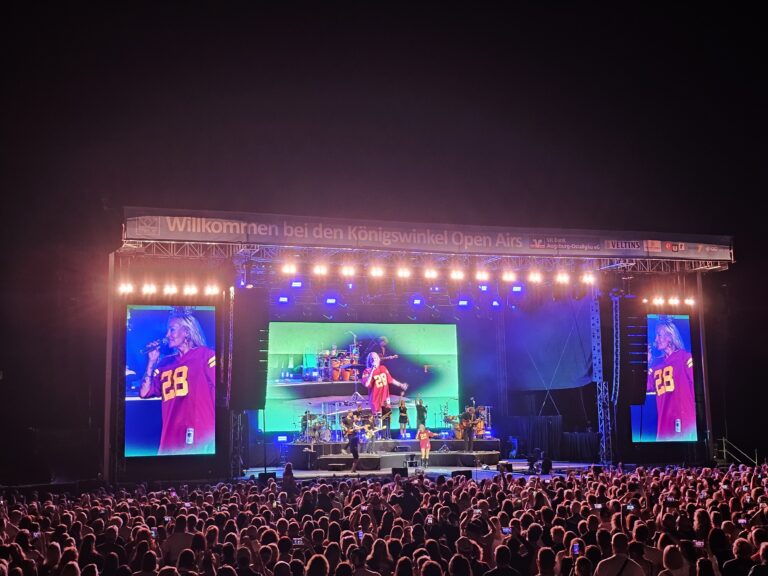
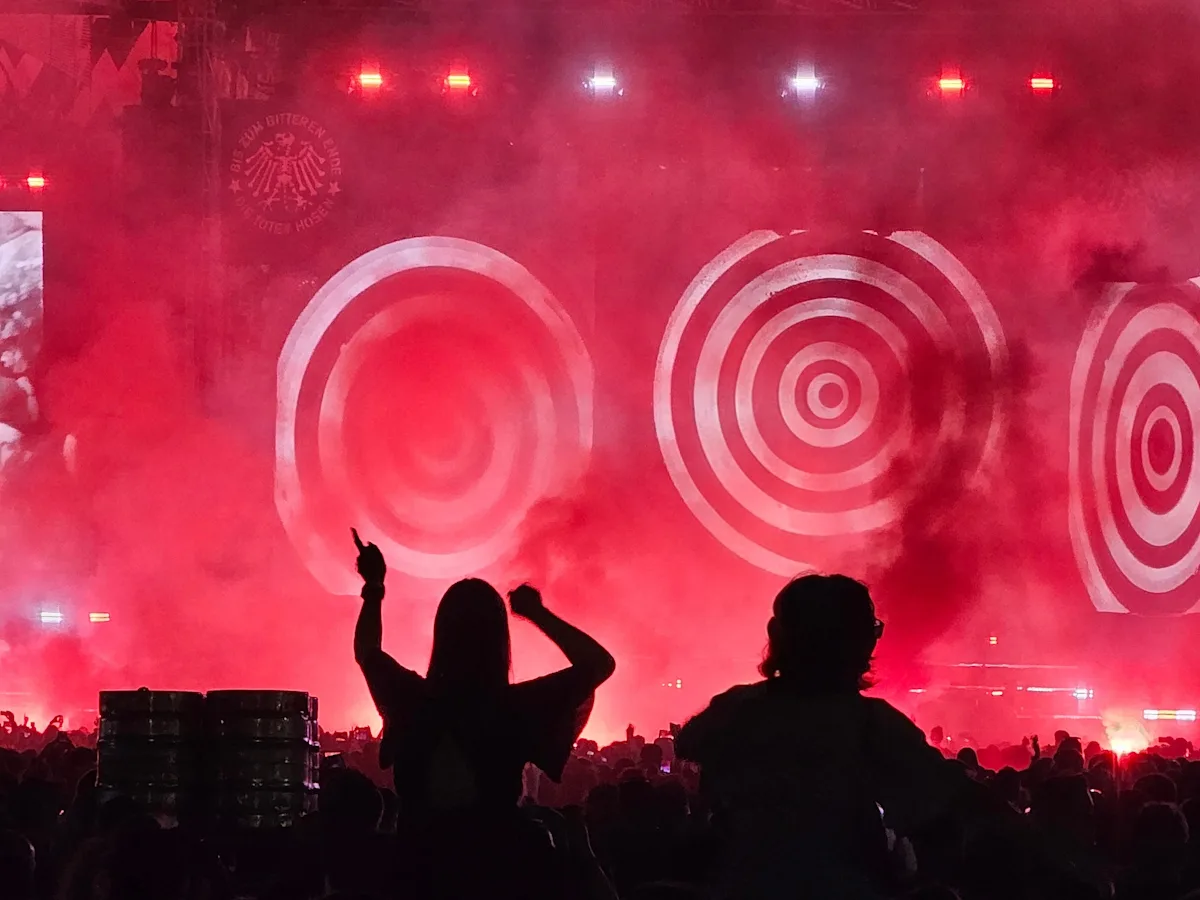
Doors opened at 3.00 pm, and three support bands — Sondaschule, Pascow and The Dead End Kids — began warming up the crowd for the Hosen from 5.30 pm. The closer showtime came, the more people poured onto the Messe Freiburg site. When Die Toten Hosen finally took to the stage at 8.30 pm, the grounds were packed to capacity with more than 53,000 visitors.
It was not only the number of people that was impressive, but also the make-up of the crowd. Old punks stood alongside families with young children. Rockers politely made room for elderly ladies who had presumably been making the pilgrimage to the band’s concerts for decades. Looking more closely at the audience, it became clear that Die Toten Hosen are now far more than a punk band. Few German bands manage to bring together people from so many generations and such different backgrounds quite so naturally. The Hosen have become a German institution, comparable with Udo Lindenberg and BAP.
Also noteworthy is the policy that Die Toten Hosen have upheld for years. While many large concerts sell expensive front-of-stage tickets for the area directly in front of the stage, Die Toten Hosen follow a different principle: Anyone who arrives at the venue early enough receives a wristband and is allowed into the roped-off area in front of the stage. Once capacity is reached, no more wristbands are issued. So it’s not your wallet that determines how close you get to the band, but solely the time of your arrival. In an era of increasingly exclusive concert offerings, this concept feels refreshingly democratic and fits perfectly with the band’s philosophy.
Also noteworthy is the policy that Die Toten Hosen have upheld for years. While many large concerts sell expensive front-of-stage tickets for the area directly in front of the stage, Die Toten Hosen follow a different principle: Anyone who arrives at the venue early enough receives a wristband and is allowed into the roped-off area in front of the stage. Once capacity is reached, no more wristbands are issued. So it’s not your wallet that determines how close you get to the band, but solely the time of your arrival. In an era of increasingly exclusive concert offerings, this concept feels refreshingly democratic and fits perfectly with the band’s philosophy.
The tour, “Trink aus, wir müssen gehen!”, accompanies the band’s latest studio album of the same name and may well be Die Toten Hosen’s farewell tour. After more than four decades, another true giant of the music scene could be preparing to bow out.
Yet what Campino and his fellow band members delivered on stage left no room for thoughts of retirement. In excellent spirits, in superb voice and right on point, the band worked its way through song after song from its extensive repertoire. By the end, there would be 35 pieces in total, if one includes the intro and the legendary outro, Vicky Leandros’s “Ich liebe das Leben”. The result was a truly mammoth concert.
From the opening bars of “Opel-Gang” to the final encore, the energy on stage never let up. Campino seemed determined to savour every minute of the evening, and of course that carried over to the audience. Some fans from the early days probably wished for more songs from the Hosen’s wild beginnings. Even so, the set left nothing to be desired. After all, this was no mere string of big radio hits. Classics such as “Hier kommt Alex”, “Alles aus Liebe”, “Zehn kleine Jägermeister” and “Tage wie diese” alternated with newer tracks and rarely played songs. The fact that “Ein guter Tag zum Fliegen” and “Strom” even found their way into the programme as tour debuts showed how much effort the band puts into surprising its fans again and again.
Freiburg is familiar territory for Die Toten Hosen. This was already their 16th appearance in the city. Accordingly, Campino looked back several times during the evening on earlier visits and made it clear that Freiburg is a special place for the band.
One story from the early years, which had taken place at Freiburg’s Crash, caused particular amusement. Although the club was still officially closed, the owner happened to be there already. At that point, he did not yet know Die Toten Hosen. He let them in anyway, whereupon one of the band members first threw up in front of the bar and then ordered a gin and tonic. Out of this rather unusual first encounter grew a friendship between the band and Crash. The Hosen played there in 1983 and 1986, back then still to small audiences.
As impressively as the band performed on stage, the organisation outside it was chaotic. In all the years I have been going to concerts, I have rarely experienced an event that asked so much of its guests.
Anyone wanting to buy a drink had to bring a great deal of patience. I myself experienced a wait of well over an hour. At the end of it, however, there was not the hoped-for beer, but a huge disappointment. Card payments had failed in the meantime, and without cash there was nothing to be had. Incidentally, nobody had to go thirsty, as free water dispensers were available across the site — excellent in this heat.
Yet what would probably have led to aggression and stress at most other events was taken very differently by the Hosen audience. Naturally, nobody had a good word to say about the conditions. But people queued together peacefully and got to know their fellow sufferers quite well. The man next to me on the right was already at his 29th Die Toten Hosen concert and proudly showed me a photograph of his first concert ticket from 1983. His son, of course, was there too.
This mixture of decades-long attachment, memories and new stories ran like a thread through the concert.
For all the quality on stage, there were also one or two brief human moments there as well. During “Was ist mit uns los”, Campino briefly stumbled over the lyrics and seemed a little annoyed with himself. During “Alle sagen das”, the band had to start again. But moments like these are exactly what show that this is a live concert by a band, not a show choreographed down to the very last detail.
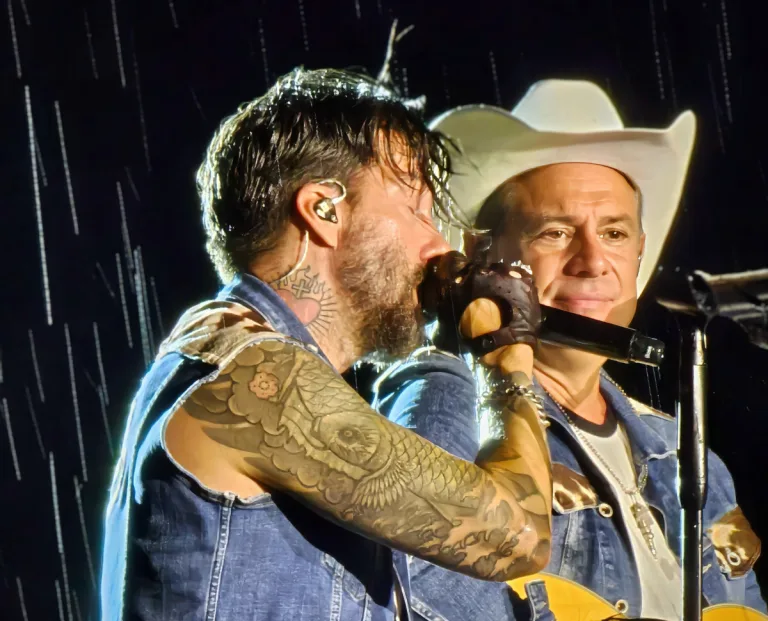
One of the evening’s special moments was the appearance by Frankie Bartelt. The now 83-year-old singer from Emmendingen, frontman of the band The Yankees, came on stage with Campino for the song “Halbstark” and was greeted enthusiastically by the audience.
The story behind this appearance went back a long way. In 1966, The Yankees performed “Halbstark” in the first edition of Beat-Club and briefly achieved cult status. More than half a century later, Frankie was now standing in front of over 53,000 people on a Die Toten Hosen stage. Frankie was in excellent spirits, even if he sometimes seemed slightly overwhelmed, which was more than understandable given the crowd in front of him. Before the first notes rang out, he winkingly called on all visitors from his year group to raise their walking frames in the air. It was precisely moments like these that made the evening special.
But of course, above all, it was an evening for the Hosen. When 52,000 people sing together with a band, it creates goosebump moments. The audience had plenty of those, and more than one tear could be seen on the screens when the camera captured the crowd. What remains, on the one hand, is the feeling that I made a big mistake in the past. Fifteen times, I had failed to see this band in nearby Freiburg. More importantly, though, I was able to enjoy this evening to the full — even without beer.